
Kibbe Type Comparison
Dramatic Classic vs Soft Dramatic
Can't decide if you're a Dramatic Classic or Soft Dramatic? You're not alone—this is one of the most common points of confusion in the Kibbe system.
Make sense of the clothing lines
Ten current identities, with historical guides preserved
David Kibbe describes ten image identities. Older thirteen-type lists also include pure Classic, Natural and Gamine. Our guides keep those terms for reference. The outfit experiments here are our independent interpretation, not an official typing method. See David Kibbe’s framework and his updated book, Power of Style.
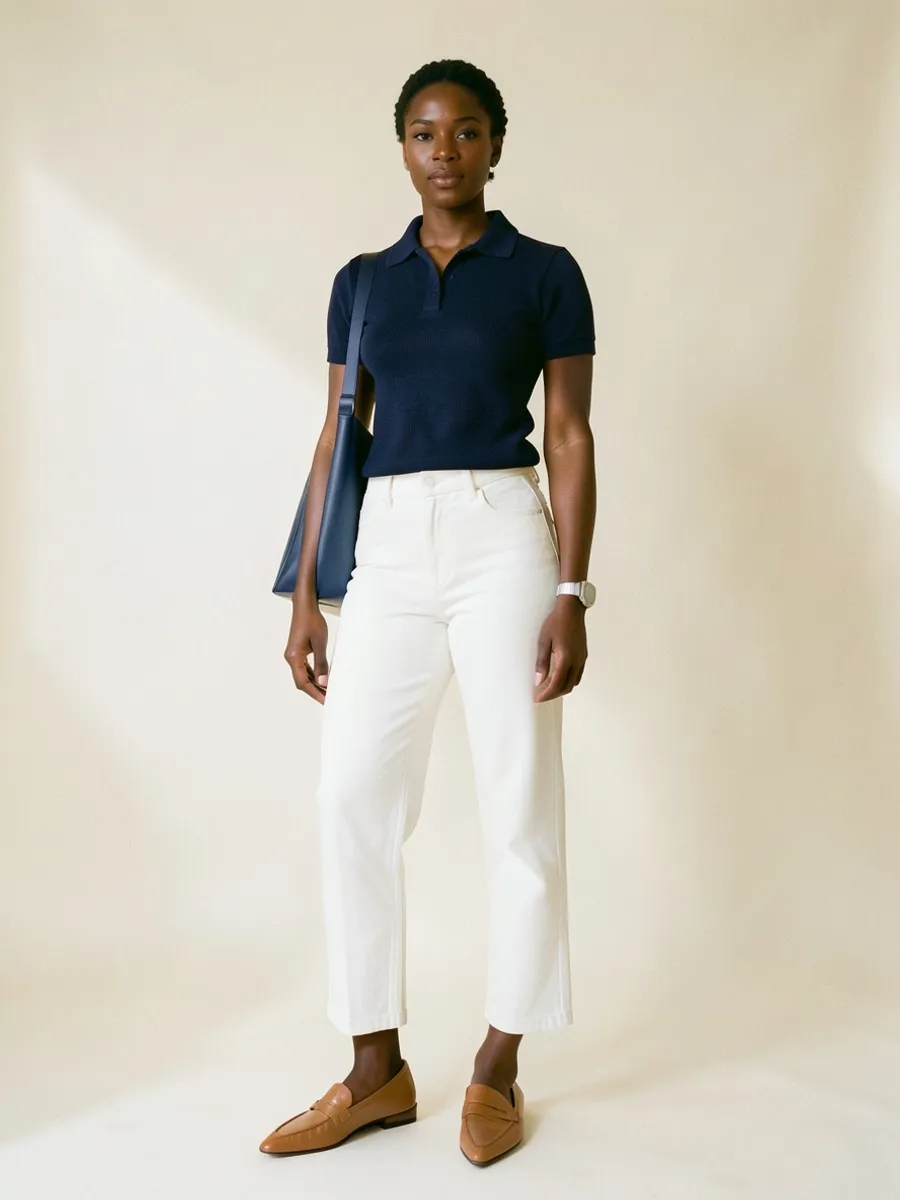
Dramatic Classic · AI outfit illustration
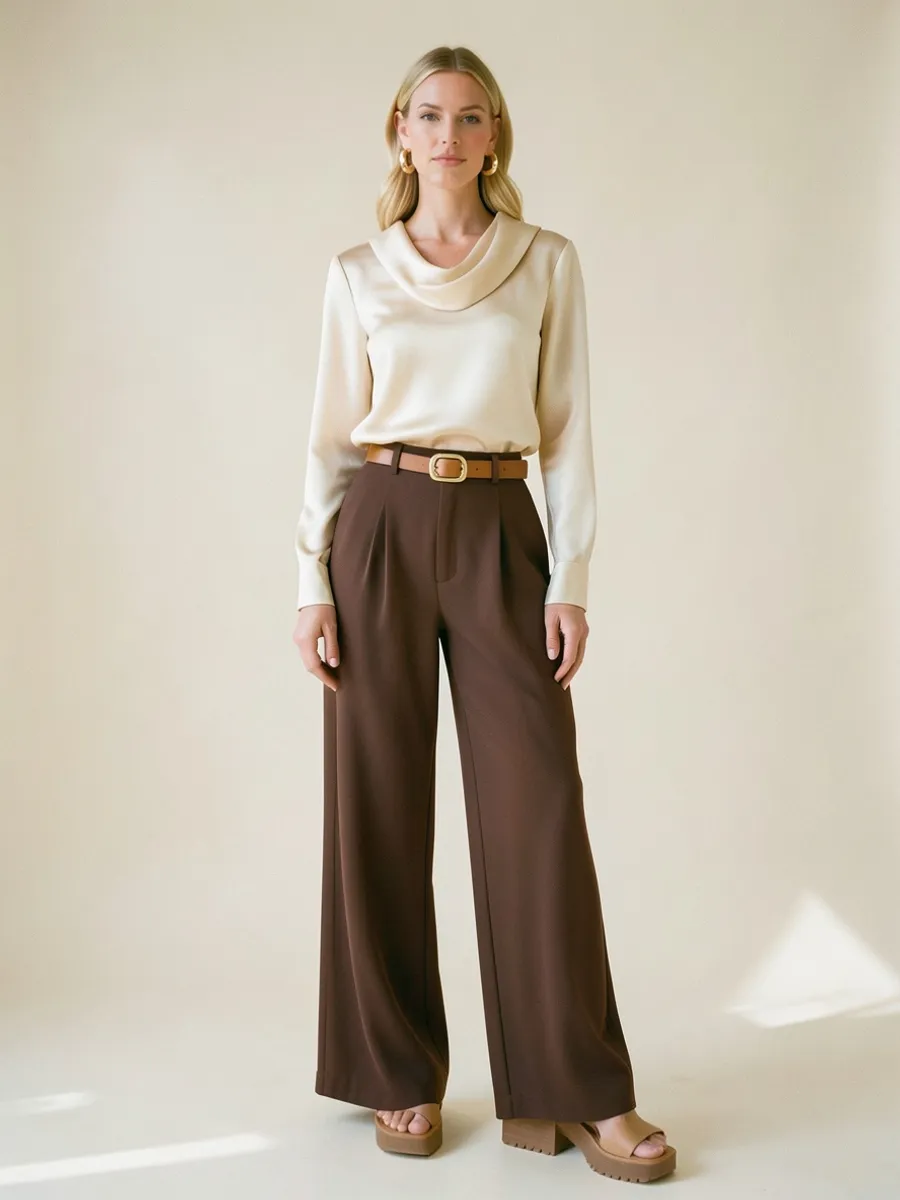
Soft Dramatic · AI outfit illustration
Dramatic Classic and Soft Dramatic sound like siblings, and the shared word makes them seem one step apart. They aren't. The honest framing: Dramatic Classic is the type of moderation — balanced, contained, with a whisper of sharpness. Soft Dramatic is the type of excess — long lines, big presence, lush curve, all of it demanding room. If you're torn between them, the answer usually arrives fast once you stop reading descriptions and start measuring what your body actually asks for.
Dramatic Classic
Balanced with Yang influence
Polished sophistication with edge. Dramatic Classics have the balanced proportions of Classics with a slight Yang sharpness.
Full Dramatic Classic GuideSoft Dramatic
Yang with Yin undercurrent
Bold and sensual curves. Soft Dramatics combine a strong Yang bone structure with soft, curvy flesh.
Full Soft Dramatic GuideWhy Dramatic Classic and Soft Dramatic Get Confused
Both types get called "elegant with an edge," and that vague overlap causes the confusion. A Soft Dramatic reads about DC "sophistication with sharpness" and thinks, that's me — polished, strong, a little soft. A Dramatic Classic sees "yang bones with yin flesh" and thinks of her own slight curves. Style adjectives are useless here; both women can love a power blazer and a red lip. What separates them is geometry: how much vertical line the body carries, and whether there is genuine flesh curve that clothing must make space for.
The Key Difference
Everything about Dramatic Classic is moderate with a sharp finish: moderate height and limbs, symmetrical features, then a slight angularity that keeps her from being pure Classic. Nothing on a DC body needs accommodating; cleanly cut clothes in her true size simply fit. Soft Dramatic is the opposite condition — two loud accommodation needs at once. A long vertical line that eats up fabric, plus soft, fleshy curve at bust and hip that standard cuts strain against. The DC's shopping question is "is this refined enough?" The SD's is "is this big enough — long enough, draped enough, generous enough through the curve?" If off-the-rack knee-length sheaths fit you without alteration, you are almost certainly not a Soft Dramatic.
Frame and clothing fit
Start with vertical line, because it settles most of these debates on its own. Dramatic Classics have a moderate vertical — usually around 5'4" to 5'6" — and crucially they look their height, because balanced proportions photograph true to size. Their bones carry slight angularity: a defined jaw, level neat shoulders, hands and feet proportional to the frame. Sharp, yes, but small-scale sharp. Precise rather than imposing. Soft Dramatics carry serious yang in the skeleton: long limbs, broad or sharp shoulders, large hands and feet, prominent bones. Most stand 5'6" or taller, and even the ones who don't read taller, because the vertical line is long relative to the frame. Stand an SD next to a DC of identical height and the SD still looks like the bigger woman — her bones take up more visual space. The tell people miss: symmetry versus length. DC bones are about balance, nothing dominating. SD bones are about elongation and scale — the line pulls downward, the shoulders reach outward. Look at your own hand. A DC hand is tidy and proportionate; an SD hand is long-fingered and large, often with visible bone at the knuckle. Unglamorous check, but it rarely lies.
| Dramatic Classic | Soft Dramatic |
|---|---|
Balanced, moderate frame | Long vertical line |
Slightly angular bones | Broad or sharp shoulders |
Symmetrical proportions | Long limbs |
Moderate vertical line | Large hands and feet |
Slightly sharp edges | Prominent bones |
Body Flesh and Curves
Flesh is where the "Soft" in Soft Dramatic stops being a mood and becomes a fitting-room fact. SD flesh is genuinely lush: full bust and/or hips, a rounded waist, soft upper arms and thighs. This curve sits on a big yang skeleton, which is why SDs describe such specific shopping misery — the size that fits the shoulders gapes at the waist, the size that fits the bust strains across the back, and everything is somehow also too short. Curve on an SD is an accommodation need, not a garnish. Dramatic Classic flesh is lean to moderate and evenly distributed. A DC can have a defined waist and a proportionate bust, but her flesh never overwhelms a cut. The diagnostic is weight change. When an SD gains, it goes straight to bust, hips, and upper arms, and her structured pieces stop closing. When a DC gains, she stays even and just needs the next size in the same silhouette. If a well-cut blazer has ever been impossible across your bust while hanging empty at your waist, moderation is not your story.
| Dramatic Classic | Soft Dramatic |
|---|---|
Moderate, even distribution | Soft, fleshy curves |
Lean to moderate build | Full bust and/or hips |
Slight angularity | Rounded waist |
Even proportions | Soft arms and thighs |
Not overly soft | Lush, sensual body |
Try a fair outfit comparison
The chandelier earring test. Put on the biggest earrings you own — long, glittering, borderline theatrical — with hair pulled back. On a Soft Dramatic they settle in and look almost subtle; her scale absorbs ornament and asks for more. On a Dramatic Classic the same earrings wear her, reading as costume within seconds. Swapping to sleek studs is instant relief. The structured sheath test. Try a crisp knee-length sheath in firm fabric, no stretch. On a DC this is close to a perfect garment — it skims, sharpens, ends at a flattering point. On an SD it's a catalogue of failures: pulling at the bust, riding up at the hip, a hem chopping her long line at an awkward spot. Two tests, one principle: DC bodies reward restraint, SD bodies punish it.
Celebrity references and their limits
Olivia Palermo is the Dramatic Classic case study. Watch her front-row looks: cropped tailored jackets, slim trousers, structured coats, small refined accessories, everything ending exactly where it should. Nothing drapes, trails, or plunges — and she looks immaculate, because her balanced, slightly sharp frame is the structure and clean tailoring simply traces it. In oversized or heavily draped pieces, she disappears. Sofia Vergara is the Soft Dramatic proof. Her red-carpet formula barely changes: floor-length mermaid gowns, deep sweetheart necklines, fabric clinging through the bust and hip then flaring, big waves, jewelry visible from the back row. That amount of dress would swallow Palermo whole; on Vergara it looks proportionate, necessary even. And when Vergara does wear a boxy suit, her curve fights the cut and the lushness reads as bulk instead of glamour. Same "glam" label, opposite machinery.
Dramatic Classic Celebrities
Jackie Kennedy
Olivia Palermo
Claire Danes
Diane Sawyer
Jane Fonda
Demi Moore
Soft Dramatic Celebrities
Sofia Vergara
Adele
Christina Hendricks
Sophia Loren
Ashley Graham
Common Mistakes to Avoid
The classic error is a Dramatic Classic talking herself into Soft Dramatic because she wants the glamour. SD styling is seductive, and "I have presence" feels truer than "I am moderate." But put a true DC in a deep-V liquid-jersey gown and she looks diminished, like the dress is still on the hanger. Her power is precision; excess muffles it. The reverse happens too: curvy SDs taught to "minimize" spend years in tidy tailoring, feeling strangled and matronly in clothes that look wonderful on their DC friends. Neither woman is wrong about being striking. They're wrong about the mechanism.
How Styling Differs Between These Types
Dramatic Classic styling is subtraction. Sharp tailoring, clean minimal lines, monochrome, crisp fabrics with body — fine wool, gabardine, structured silk. Moderate lengths, small polished accessories, one point of edge per outfit. A DC wardrobe should look expensive and slightly severe; fussiness and volume are her enemies. Soft Dramatic styling is addition. Long, unbroken lines first — maxi lengths, long coats, vertical drape. Then curve honored, never boxed in: wrap and cowl necklines, liquid jersey, velvet, soft silk following the bust and hip. Then ornament at scale — bold prints, big jewelry, dramatic sleeves. The SD rule: when you think it's too much, it's exactly enough. The DC rule: when you want to add one more thing, don't.
Dramatic Classic Style Recommendations
- Sharp tailoring
- Clean, minimalist lines
- Sophisticated pieces
- Structured but not stiff
- Monochromatic looks
- Quality over quantity
Soft Dramatic Style Recommendations
- Draped, flowing fabrics
- Bold silhouettes
- Deep necklines
- Curve-hugging shapes
- Statement pieces
- Long, unbroken lines
Frequently Asked Questions
Still Not Sure Which Type You Are?
Our AI-powered Kibbe body type test analyzes your proportions from photos and can help suggest a starting point between Dramatic Classic and Soft Dramatic, with its limitations clearly explained.