
Complete Guide
Kibbe Body Types: 10 Current Image Identities
Explore David Kibbe's 10 current image identities, the Yin/Yang system, and three historical types you may encounter in older guides.
Ten current identities, with historical guides preserved
David Kibbe describes ten image identities. Older thirteen-type lists also include pure Classic, Natural and Gamine. Our guides keep those terms for reference. The outfit experiments here are our independent interpretation, not an official typing method. See David Kibbe’s framework and his updated book, Power of Style.
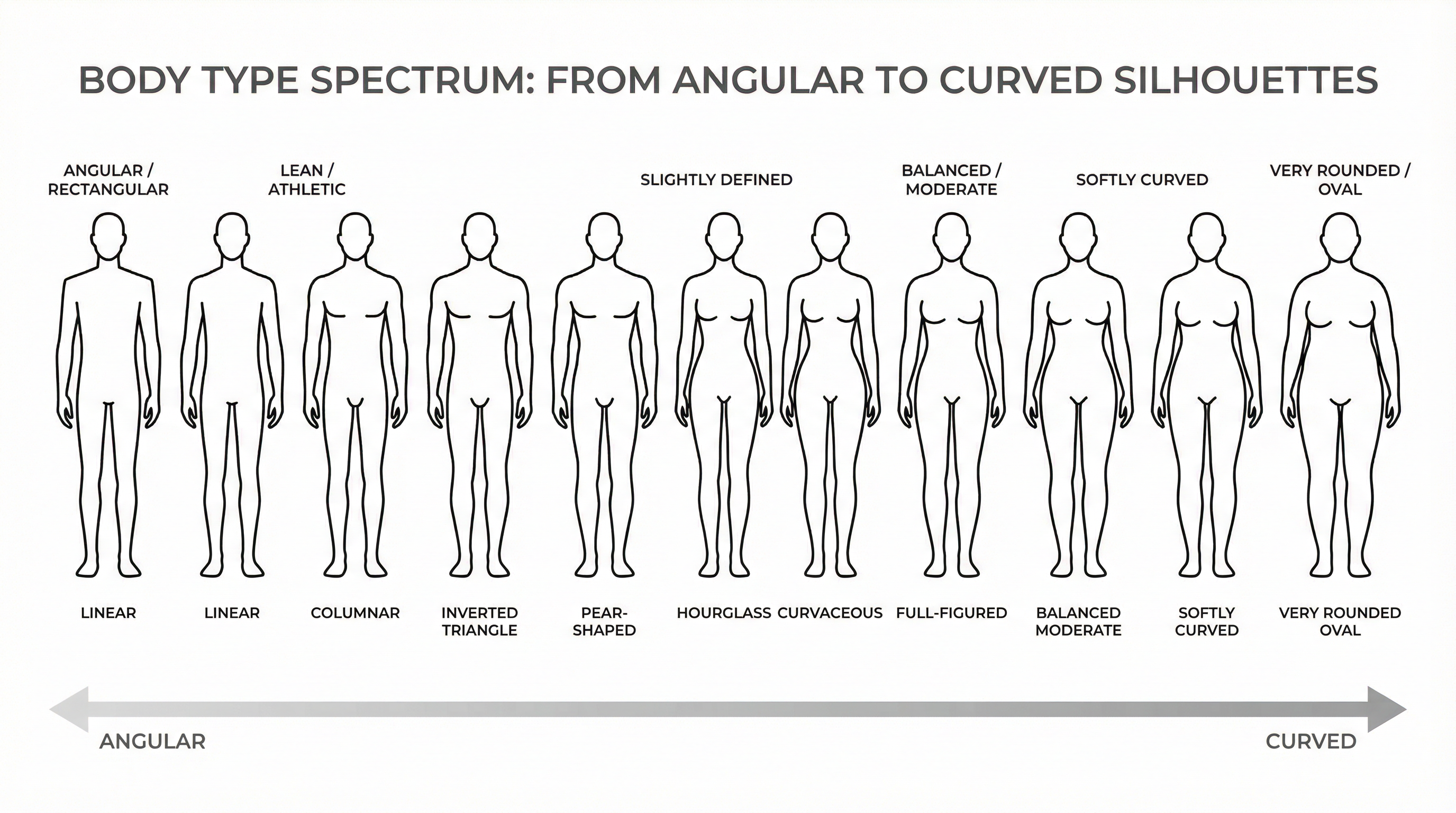
Historical 13-type chart: pure Classic, Natural and Gamine are included for reference. The current system has 10 image identities.
What is the Kibbe Body Type System?
The Kibbe Body Type System was created by David Kibbe in his 1987 book "Metamorphosis." Unlike traditional body typing systems that focus only on proportions (like pear, apple, or hourglass), Kibbe considers your entire physical presence—bone structure, facial features, flesh distribution, and overall essence.
The current system describes 10 image identities, each with style recommendations that honor your natural lines rather than trying to "correct" them. The goal isn't to look taller, shorter, curvier, or straighter—it's to look like the most harmonious version of yourself.
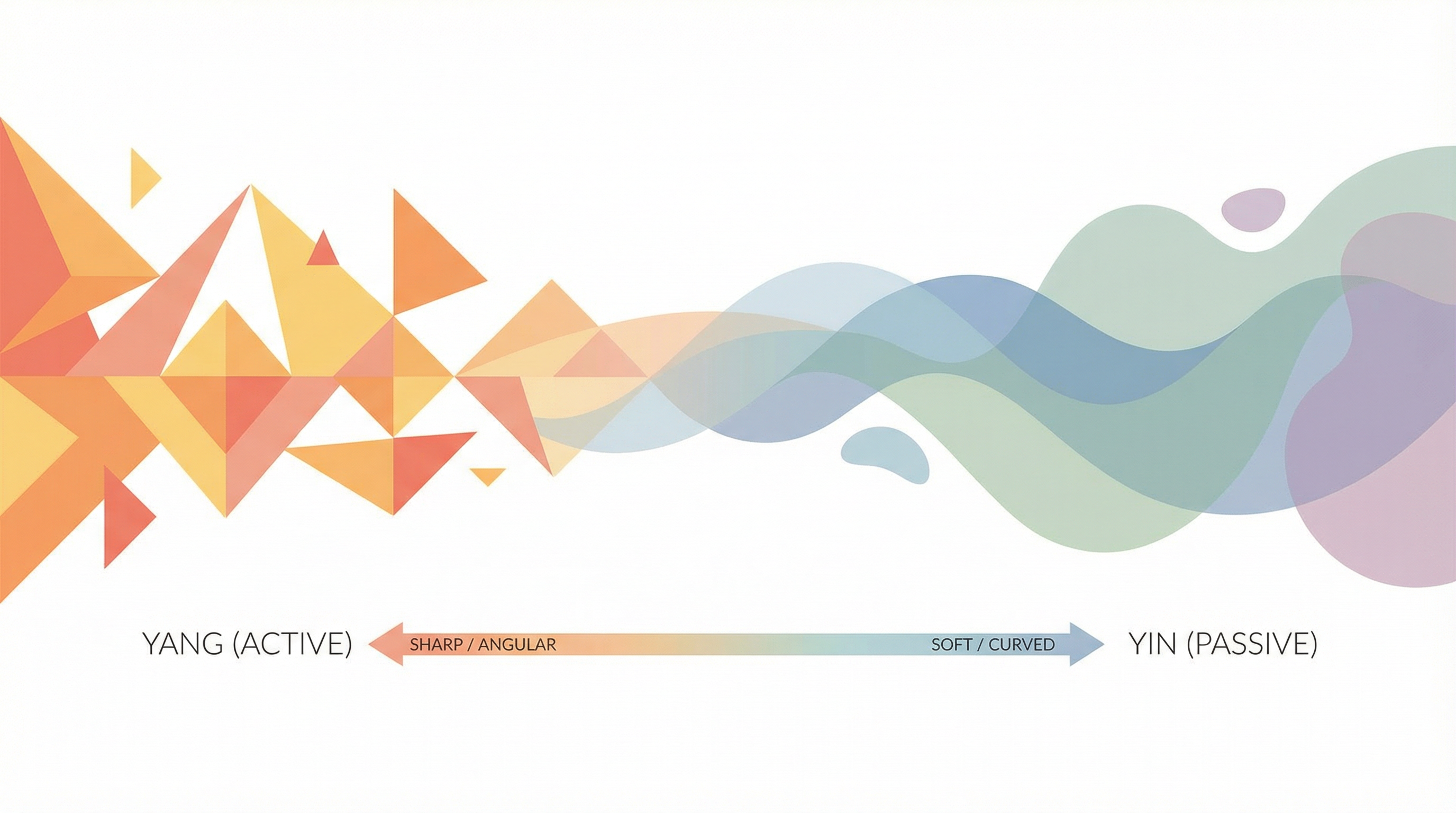
At its core, Kibbe is about understanding your unique balance of Yin (soft, curved, delicate) and Yang (sharp, angular, strong) characteristics, and dressing to complement that balance.
Understanding Yin and Yang
Every Kibbe type is defined by its position on the Yin/Yang spectrum. Understanding these concepts is key to understanding your type.
Yin Characteristics
Soft, rounded, delicate, small, curved
• Rounded bone structure
• Soft, fleshy curves
• Full lips, large eyes
• Delicate, sloping shoulders
• Short to moderate vertical line
Yang Characteristics
Sharp, angular, strong, long, straight
• Angular bone structure
• Lean, taut flesh
• Narrow features, thin lips
• Sharp, prominent shoulders
• Long vertical line
The 10 Current Identities and 3 Historical Types
Organized by family, from most Yang to most Yin. David Kibbe describes a ten-archetype Image Identity System. Pure Classic, Natural and Gamine are historical references, labeled below.
Dramatic Family
Sharp, angular, and vertical. The bold, striking types.
Dramatic
Current image identity
Pure Yang
Sharp, angular, and striking
Celebrities: Tilda Swinton, Cate Blanchett
Learn moreSoft Dramatic
Current image identity
Yang with Yin undercurrent
Bold and sensual curves
Celebrities: Sofia Vergara, Adele
Learn moreNatural Family
Blunt, broad, and relaxed. The effortless, athletic types.
Flamboyant Natural
Current image identity
Dominant Yang with bluntness
Free-spirited and statuesque
Celebrities: Jennifer Lawrence, Cameron Diaz
Learn moreNatural
Historical reference
Balanced Yang with bluntness
Effortlessly relaxed
Celebrities: Jennifer Aniston, Meg Ryan
Learn moreSoft Natural
Current image identity
Soft Yang
Approachable and feminine
Celebrities: Scarlett Johansson, Gigi Hadid
Learn moreClassic Family
Balanced, symmetrical, and moderate. The timeless, refined types.
Dramatic Classic
Current image identity
Balanced with Yang influence
Polished sophistication with edge
Celebrities: Jackie Kennedy, Olivia Palermo
Learn moreClassic
Historical reference
Perfectly balanced Yin and Yang
Timeless elegance
Celebrities: Grace Kelly, Meryl Streep
Learn moreSoft Classic
Current image identity
Balanced with Yin influence
Graceful and refined femininity
Celebrities: Naomi Watts, Marion Cotillard
Learn moreGamine Family
Petite, compact, and contrasted. The youthful, energetic types.
Flamboyant Gamine
Current image identity
Yang in a compact frame
Edgy and youthful
Celebrities: Audrey Hepburn, Twiggy
Learn moreGamine
Historical reference
Mixed Yin and Yang in small frame
Playfully contrasted
Celebrities: Mia Farrow, Jean Seberg
Learn moreSoft Gamine
Current image identity
Yin dominant in compact frame
Charming and doll-like
Celebrities: Reese Witherspoon, Winona Ryder
Learn moreRomantic Family
Soft, curved, and sensual. The feminine, lush types.
Theatrical Romantic
Current image identity
Yin dominant with slight Yang undercurrent
Dramatic glamour meets curves
Celebrities: Vivien Leigh, Salma Hayek
Learn moreRomantic
Current image identity
Pure Yin
Soft, sensual, and feminine
Celebrities: Marilyn Monroe, Drew Barrymore
Learn moreQuick Reference Chart
| Type | Status | Yin/Yang | Key Traits | Height |
|---|---|---|---|---|
Dramatic | Current image identity | Pure Yang | Long vertical line | 5'7" and up |
Soft Dramatic | Current image identity | Yang with Yin undercurrent | Long vertical line | 5'7" and up |
Flamboyant Natural | Current image identity | Dominant Yang with bluntness | Broad, blunt shoulders | 5'7" and up |
Natural | Historical reference | Balanced Yang with bluntness | Moderate vertical line | Any height |
Soft Natural | Current image identity | Soft Yang | Moderate vertical line | Any height |
Dramatic Classic | Current image identity | Balanced with Yang influence | Balanced, moderate frame | Any height |
Classic | Historical reference | Perfectly balanced Yin and Yang | Moderate, balanced frame | Any height |
Soft Classic | Current image identity | Balanced with Yin influence | Moderate, balanced frame | Any height |
Flamboyant Gamine | Current image identity | Yang in a compact frame | Petite frame | 5'5" and under |
Gamine | Historical reference | Mixed Yin and Yang in small frame | Petite frame | 5'5" and under |
Soft Gamine | Current image identity | Yin dominant in compact frame | Petite frame | 5'5" and under |
Theatrical Romantic | Current image identity | Yin dominant with slight Yang undercurrent | Delicate with slight sharpness | Any height |
Romantic | Current image identity | Pure Yin | Rounded, soft bones | Any height |
How to Find Your Kibbe Body Type
Finding your Kibbe type can be challenging because it requires seeing yourself objectively. Here are the most common approaches:
Frequently Asked Questions
Ready to Find Your Kibbe Type?
Explore a suggested Kibbe image identity and personalized styling ideas from your photos. Use the result as a starting point for trying outfits.
Confused Between Two Types?
These are the most commonly confused Kibbe types. Read our in-depth comparisons to find your true type.
Browse Current Identities and Historical Guides
Current identity
Current identity
Current identity
Historical reference
Current identity
Current identity
Historical reference
Current identity
Current identity
Historical reference
Current identity
Current identity
Current identity