
Kibbe Type Comparison
Dramatic vs Dramatic Classic
Can't decide if you're a Dramatic or Dramatic Classic? You're not alone—this is one of the most common points of confusion in the Kibbe system.
Make sense of the clothing lines
Ten current identities, with historical guides preserved
David Kibbe describes ten image identities. Older thirteen-type lists also include pure Classic, Natural and Gamine. Our guides keep those terms for reference. The outfit experiments here are our independent interpretation, not an official typing method. See David Kibbe’s framework and his updated book, Power of Style.
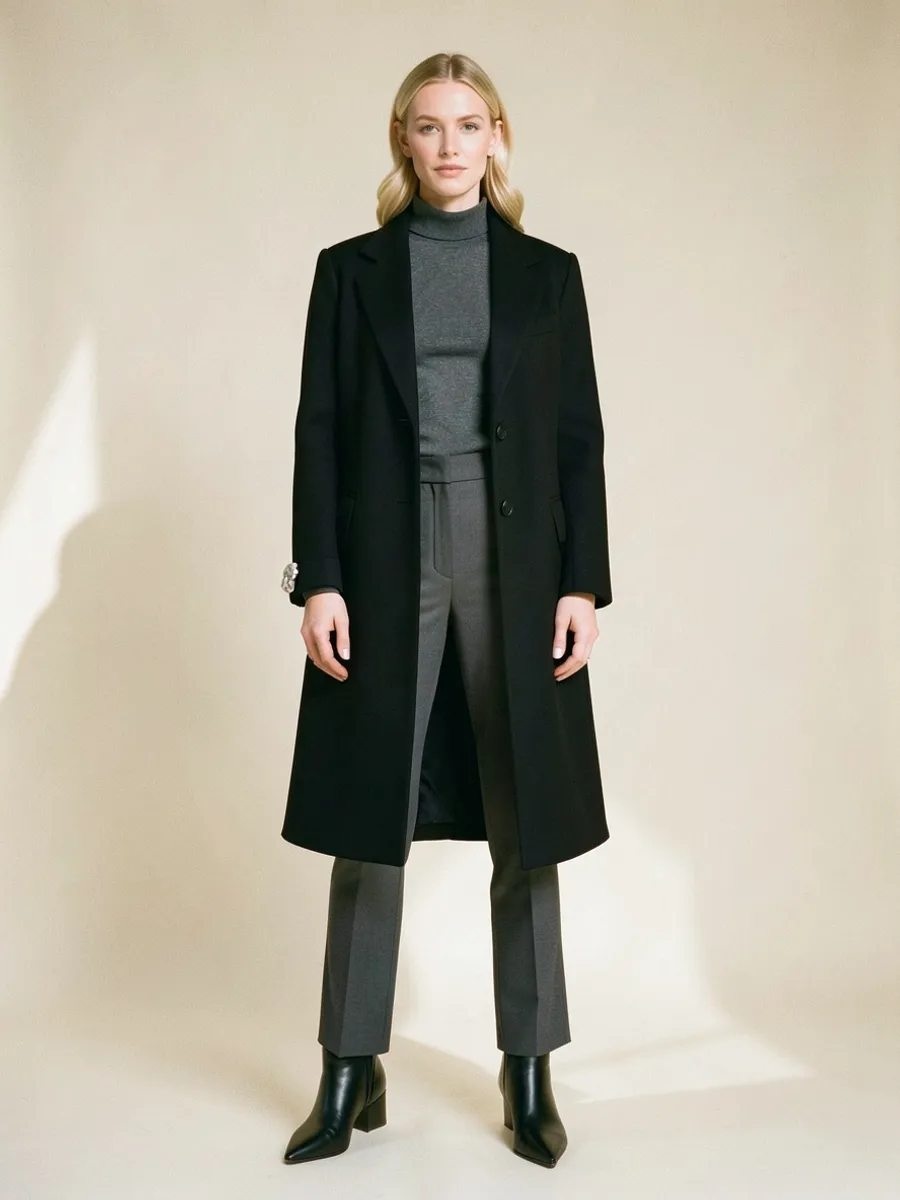
Dramatic · AI outfit illustration
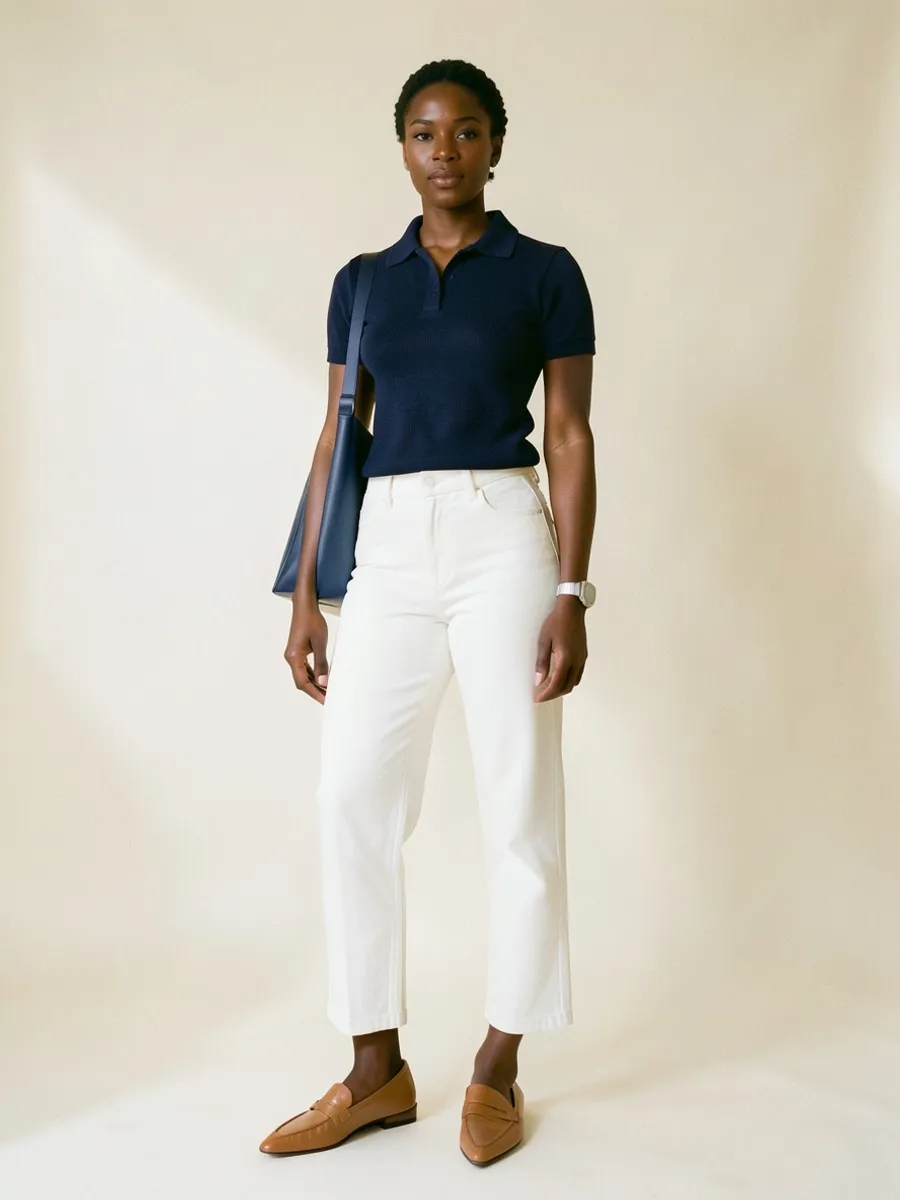
Dramatic Classic · AI outfit illustration
Dramatic and Dramatic Classic sit on the same sharp axis of the Kibbe system, which is exactly why women get stuck between them. Both have angularity. Both look wrong in ruffles. Both gravitate toward tailoring and get called "intimidating" or "polished." The question separating them isn't whether you're sharp—it's how far the sharpness goes. Dramatic is yang at its extreme: length, narrowness, edge, nothing moderating it. Dramatic Classic is the same sharpness held inside a balanced, moderate frame. One is a straight line drawn to the edge of the page; the other knows exactly where to stop.
Dramatic
Pure Yang
Sharp, angular, and striking. Dramatics are defined by their bold, angular bone structure and long vertical line.
Full Dramatic GuideDramatic Classic
Balanced with Yang influence
Polished sophistication with edge. Dramatic Classics have the balanced proportions of Classics with a slight Yang sharpness.
Full Dramatic Classic GuideWhy Dramatic and Dramatic Classic Get Confused
Almost every Dramatic Classic flirts with Dramatic at some point, because our clothing vocabulary for "sharp" is shared: blazers, monochrome, crisp fabrics, minimal ornamentation. The confusion runs the other way too—Dramatics with symmetrical faces talk themselves down into Dramatic Classic because "extreme" sounds like an insult they haven't earned. But the types aren't separated by how edgy your taste is. They're separated by degree in the body itself: Dramatic bones are long, prominent, and extreme; Dramatic Classic bones are moderate with a sharp finish. Taste can be adjusted. Bone length can't.
The Key Difference
The defining difference is the vertical line. A Dramatic has genuine length—long limbs, long torso, an elongated look. She usually stands 5'7" or above, and even seated she reads long. A Dramatic Classic has a moderate vertical with only a hint of elongation; she photographs balanced, not towering. The second difference is prominence. Dramatic bones announce themselves: large angular hands, sharp shoulders visible through a coat, cheekbones that catch light across a room. Dramatic Classic bones are proportionate first and sharp second—the angularity shows in a defined jaw or slightly squared shoulder, never in scale. Extremity versus containment. That's the whole dispute.
Frame and clothing fit
Start with the shoulders. Dramatic shoulders are narrow and sharp, like the top of a clothes hanger—a visible point where shoulder ends and arm begins. Dramatic Classic shoulders are moderate and only slightly angular; they hold a tailored jacket beautifully because they're proportionate, not extreme. Then look down the arm. Dramatics have long limbs with large, angular, almost sculptural hands and feet. A Dramatic Classic's hands are unremarkable in the best sense: in proportion with her wrist, her forearm, her frame. Now the vertical line itself, where most mistypes get resolved. Ask someone to guess your height from a photo. Dramatics get overestimated, sometimes by several inches, because the whole skeleton is stretched—torso, neck, limbs all keep going. Dramatic Classics get guessed correctly. Nothing elongates and nothing shortens; the eye lands on symmetry, not length. Facially, the same rule applies. A Dramatic face is elongated with prominent bones: long straight nose, narrow eyes, a jawline that could cut paper. A Dramatic Classic face is symmetrical and even, with sharpness as an accent—a defined chin, slightly taut cheekbones—inside otherwise moderate features. Cover half the face in a photo and a Dramatic's half still looks striking; a DC's half looks precise, because her effect comes from the whole arrangement.
| Dramatic | Dramatic Classic |
|---|---|
Long vertical line | Balanced, moderate frame |
Sharp, narrow shoulders | Slightly angular bones |
Long arms and legs | Symmetrical proportions |
Large, angular hands and feet | Moderate vertical line |
Prominent, sharp bones | Slightly sharp edges |
Body Flesh and Curves
Neither type carries much yin in the flesh, so this is lean versus lean—but the leanness behaves differently. Dramatic flesh is taut and sinewy over prominent bone. Even when a Dramatic gains weight, the bones stay in charge: shoulders stay sharp, hands stay angular, and weight sits flat rather than curving. Hips and bust stay comparatively flat because there's no yin roundness in the blueprint. Dramatic Classic flesh is moderate and evenly distributed. Not soft—there's no rounded yin here either—but not stretched taut over jutting bone. A DC at any weight keeps her evenness; she thickens or slims proportionally, the way a Classic does. Weight change is a useful diagnostic because it reveals the skeleton's priorities. If fluctuation makes you look more gaunt and sculptural, you're likely Dramatic. If it just scales you up or down while your proportions keep the same tidy relationship, you're in Classic territory with a yang accent.
| Dramatic | Dramatic Classic |
|---|---|
Lean, sinewy muscle | Moderate, even distribution |
Minimal curves | Lean to moderate build |
Taut skin | Slight angularity |
Flat hips and bust | Even proportions |
Long, slim limbs | Not overly soft |
Try a fair outfit comparison
Try the floor-length column test. Put on the longest unbroken vertical you can find—a maxi coat or column dress, no belt, nothing interrupting shoulder to floor. On a Dramatic this is home; the garment finally has enough length to work with. On a Dramatic Classic the same piece goes heavy. Her moderate vertical can't feed that much line, so the coat wears her; she looks shorter, slightly costumed. Then reverse it with the waist-break test. Belt a sheath dress cleanly—one crisp horizontal interruption. The Dramatic Classic sharpens instantly; that single break organizes her balanced proportions and she looks expensive. The Dramatic dulls. Cutting her line in half is the one thing her body refuses. Whichever direction makes you look more like yourself is your answer.
Celebrity references and their limits
Put Tilda Swinton next to Olivia Palermo and the comparison clicks. Swinton is Dramatic in its purest form: elongated frame, sharp narrow shoulders, prominent facial bones, hands like a sculpture study. Look at how designers dress her—Haider Ackermann cut her floor-sweeping columns and severe, unbroken coats, and she carried them the way other people carry a t-shirt. The more extreme the line, the more human she looks inside it. Olivia Palermo works completely differently. Her proportions are even and moderate with a crisp, angular finish—Dramatic Classic through and through. Her signature moves are precise: a cropped structured jacket over a midi skirt, a belted coat, immaculate separates with one clean break at the waist. Notice she almost never wears an unbroken floor-length line; when stylists have tried, the look swallows her. Her power is controlled sharpness—every edge deliberate. Swinton's is uncontrolled sharpness that never needed permission.
Dramatic Celebrities
Tilda Swinton
Cate Blanchett
Taylor Swift
Keira Knightley
Jamie Lee Curtis
Dramatic Classic Celebrities
Jackie Kennedy
Olivia Palermo
Claire Danes
Diane Sawyer
Jane Fonda
Demi Moore
Common Mistakes to Avoid
The most common mistake is typing by personality and wardrobe instead of by skeleton. A woman who wears all black and owns three asymmetric coats decides she must be Dramatic—while standing 5'4" with perfectly even proportions. She's a Dramatic Classic with excellent taste in Dramatic clothes, and those clothes are quietly overwhelming her. The reverse happens too: a genuine Dramatic with conservative taste assumes she's DC because "extreme" doesn't match her self-image, then wonders why moderate tailoring always looks slightly small on her, like the volume got turned down. Watch the symmetry trap too. Dramatics can have symmetrical faces; symmetry alone doesn't make you a Classic type. Moderation of scale and length does.
How Styling Differs Between These Types
Dramatics should push length and severity as far as they will go: unbroken verticals, floor-grazing coats, sharp geometry, bold monochrome, architectural details that would look theatrical on anyone else. Moderation is the enemy—a "nice, sensible" knee-length dress makes a Dramatic look ordinary, which for this type is the true failure mode. Dramatic Classics keep the sharpness and drop the extremity. Sharp tailoring in moderate proportions: a fitted blazer ending at the hip, trousers with a clean crease, a sheath with a defined waist, fine wool and structured silk. One strong element per outfit is plenty. Where a Dramatic builds a look from one big gesture, a DC builds it from precision—fit, fabric quality, restraint. A DC copying Dramatic styling looks dressed up as someone else; a Dramatic copying DC styling looks like she's holding back. Both feel the wrongness in the mirror before they can name it.
Dramatic Style Recommendations
- Long, unbroken vertical lines
- Sharp, geometric shapes
- Bold, dramatic silhouettes
- Sleek, fitted clothing
- Architectural details
- Monochromatic looks
Dramatic Classic Style Recommendations
- Sharp tailoring
- Clean, minimalist lines
- Sophisticated pieces
- Structured but not stiff
- Monochromatic looks
- Quality over quantity
Frequently Asked Questions
Still Not Sure Which Type You Are?
Our AI-powered Kibbe body type test analyzes your proportions from photos and can help suggest a starting point between Dramatic and Dramatic Classic, with its limitations clearly explained.