
Kibbe Type Comparison
Soft Classic vs Soft Gamine
Can't decide if you're a Soft Classic or Soft Gamine? You're not alone—this is one of the most common points of confusion in the Kibbe system.
Ten current identities, with historical guides preserved
David Kibbe describes ten image identities. Older thirteen-type lists also include pure Classic, Natural and Gamine. Our guides keep those terms for reference. The outfit experiments here are our independent interpretation, not an official typing method. See David Kibbe’s framework and his updated book, Power of Style.
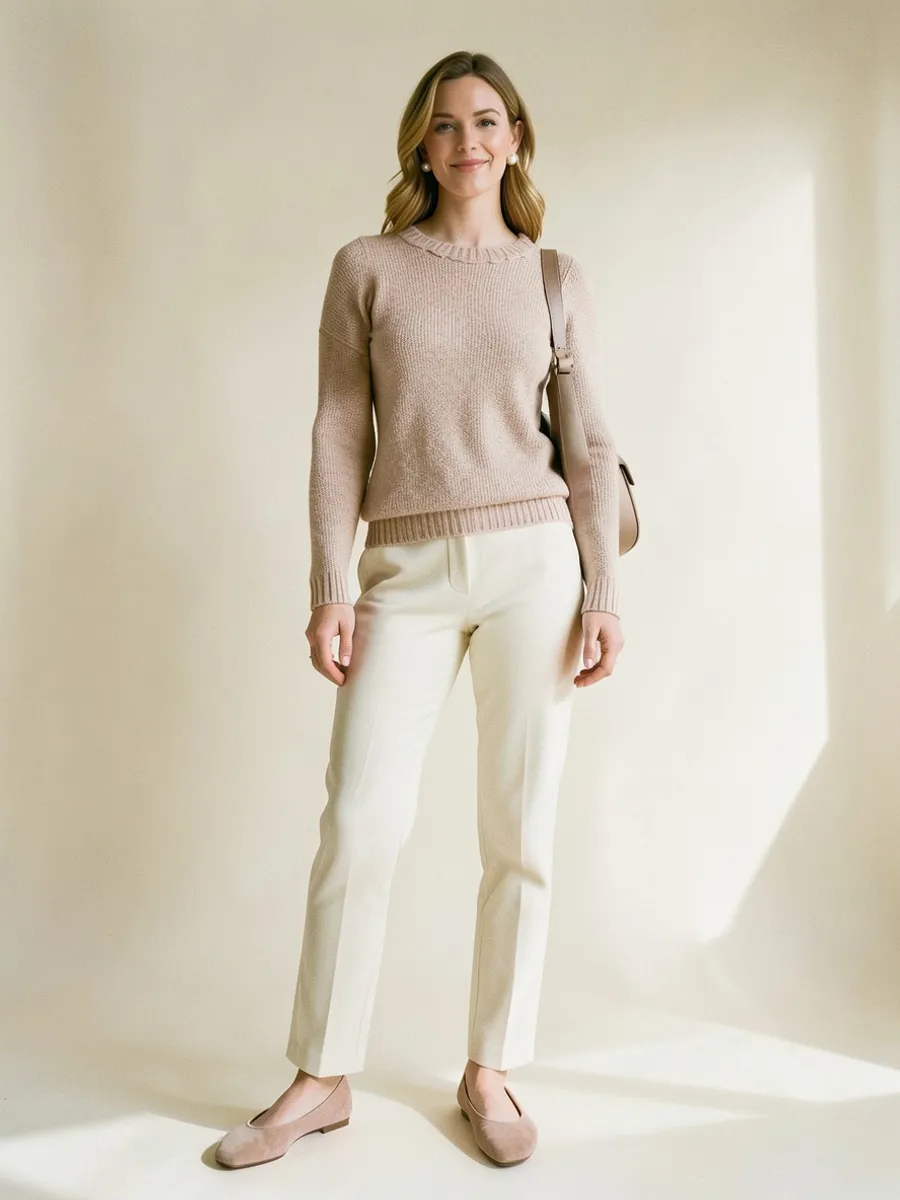
Soft Classic · AI outfit illustration
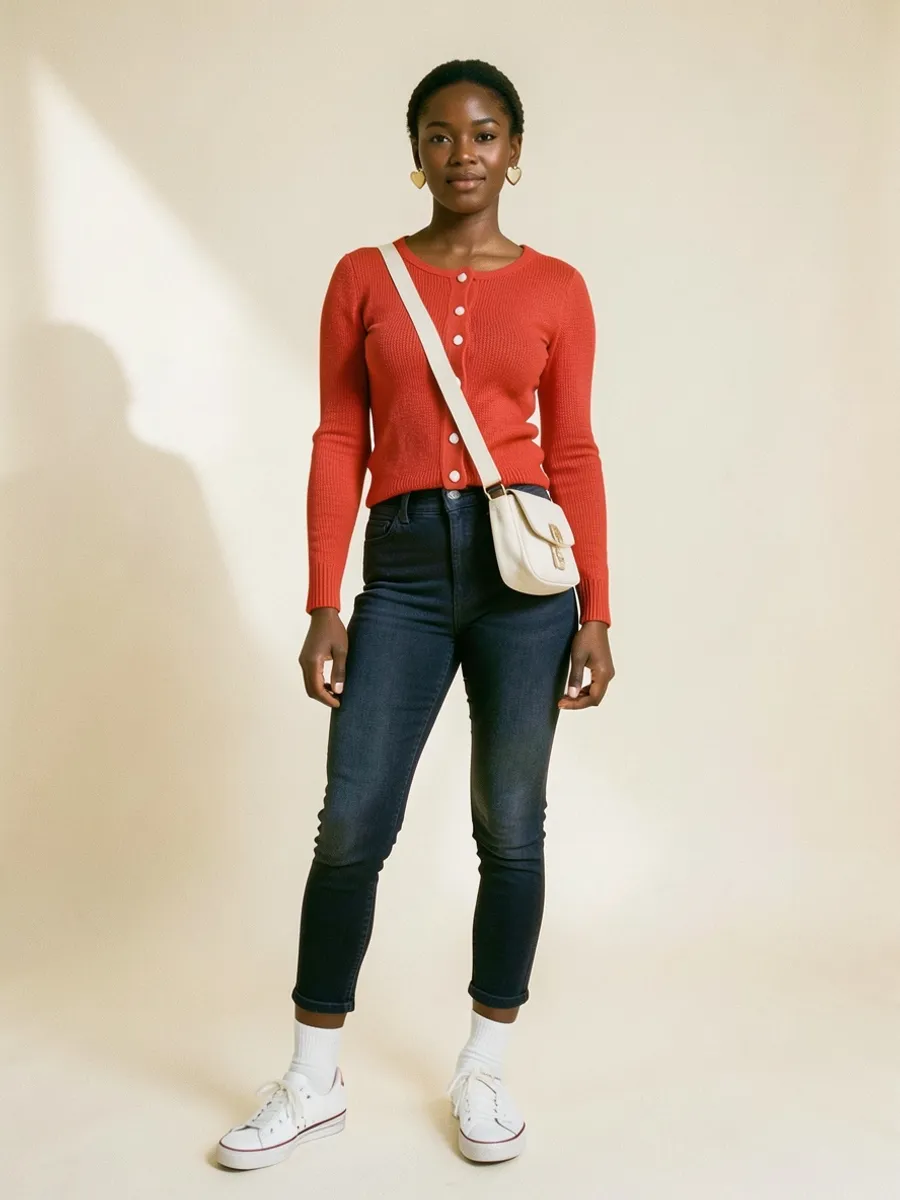
Soft Gamine · AI outfit illustration
Soft Classic and Soft Gamine both get described with the same words—cute, feminine, pretty—and both wear soft fabrics, rounded necklines, and waist definition. So the confusion makes sense. But these two types create opposite visual effects. A Soft Classic is a smooth blend: every feature agrees with every other feature, and the whole face and body read as one harmonious statement. A Soft Gamine is a collision: round doll eyes over a pointed chin, soft curves on a taut little frame. One is harmony; the other is contrast in a petite package. Once you see that, you can't unsee it.
Soft Classic
Balanced with Yin influence
Graceful and refined femininity. Soft Classics combine Classic balance with a soft, feminine undercurrent.
Full Soft Classic GuideSoft Gamine
Yin dominant in compact frame
Charming and doll-like. Soft Gamines are petite with a mix of sharp and soft features, leaning more yin.
Full Soft Gamine GuideWhy Soft Classic and Soft Gamine Get Confused
Look at the recommended styling lists side by side and you'll spot the problem: sweetheart necklines appear on both. So do soft fabrics, feminine details, and waist emphasis. Both types are told to avoid oversized clothing, stiff fabrics, and severe angular pieces. If you're building Pinterest boards, the two can look nearly interchangeable. Both also lean yin—Soft Classic is balance with a yin undercurrent, Soft Gamine is yin-dominant. But the overlap is surface-level. Each type wears those feminine details for an opposite reason, and executing them the wrong way is exactly what makes a mistyped woman feel like the system doesn't work on her.
The Key Difference
Blend versus juxtaposition. On a Soft Classic, features flow into each other—moderate bones, symmetrical proportions, gentle curves, a face where nothing dominates. Her yin is a soft filter laid evenly over everything. On a Soft Gamine, features argue with each other. She has genuine sharpness somewhere—a pointed chin, an angular jaw, crisp little shoulders—sitting right next to genuine roundness: large eyes, full cheeks, soft curves. Neither side wins, and that unresolved tension is the whole point of gamine. Scale is the second divider. Soft Gamines are petite, 5'5" and under, with a short vertical line—the eye takes them in all at once. Soft Classics have a moderate vertical with no petiteness to accommodate.
Frame and clothing fit
A Soft Classic skeleton is moderate everywhere you check. Shoulders are neither broad nor narrow; they slope gently and sit in exact proportion to the hips. The vertical line is moderate—she doesn't read as tall or as tiny. Bone edges are slightly softened, never sharp, never blunt. What her frame demands from clothing isn't width accommodation or length accommodation. It demands symmetry. Any garment that throws proportions off—one strong shoulder, an aggressively cropped hem, a lopsided drape—registers as noise against her evenness. A Soft Gamine skeleton is small and mixed. The vertical line is short, the bones are delicate in scale, and yet there's sharpness threaded through the delicacy: a taut jaw, small pointed shoulders, sharp little elbows and knees on an otherwise rounded body. Her hands and feet run small. Nothing about her frame is moderate—it's compact and it's contradictory at the same time. The practical consequence: a Soft Classic can wear a fluid ankle-length column and look regal, because her moderate vertical carries it. That same column swallows a Soft Gamine; her short vertical needs broken-up silhouettes and hems that stop before the fabric takes over.
| Soft Classic | Soft Gamine |
|---|---|
Moderate, balanced frame | Petite frame |
Slightly soft edges | Delicate with some sharpness |
Symmetrical proportions | Short vertical line |
Moderate vertical | Small, slightly rounded |
Gentle slopes | Compact proportions |
Body Flesh and Curves
Soft Classic flesh behaves the way everything else about her behaves: evenly. Curves are present but moderate—a gentle hourglass tendency rather than a headline. Softness distributes uniformly through the arms, thighs, and face, so no single area pulls focus. Her flesh confirms the balance of her bones instead of contrasting with it. That's why she photographs as serene: the softness never fights anything. Soft Gamine flesh is louder. A full bust or rounded hips can appear on a genuinely tiny frame, and curves at that scale look emphatic, not subtle. Cheeks are full, lips are full, arms and legs are soft. But all of that roundness is pinned to sharp, compact bones, so the flesh never forms a smooth line the way it does on a Romantic or a Soft Classic. It creates the doll-like quality Kibbe describes: rounded volumes snapped onto a small, crisp armature. On her, softness is one voice in an argument, not the whole conversation.
| Soft Classic | Soft Gamine |
|---|---|
Soft, moderate curves | Soft, rounded curves |
Even distribution | Full bust/hips possible |
Slightly rounded | Soft arms and legs |
Gentle hourglass tendency | Rounded overall |
Soft arms and thighs | Feminine softness |
Try a fair outfit comparison
Test one: the monochrome column. Dress head to toe in a single color with no waist break—a long tonal dress or a matching knit set worn loose. A Soft Classic looks expensive and composed; the unbroken line suits her blended proportions. A Soft Gamine looks erased—washed out and oddly frumpy until she adds a belt or a contrast collar, at which point the look switches back on. Test two: the feature inventory. Study your bare face in a photo, not a mirror, and name each feature's quality. Round eyes. Pointed chin. Full cheeks. Sharp nose. If at least two answers contradict each other, you're in gamine territory. If every answer comes back "moderate, matches the rest," that's the Soft Classic blend. Soft Classics genuinely struggle to name a standout feature. Soft Gamines can name two that clash without thinking.
Celebrity references and their limits
Naomi Watts and Reese Witherspoon are both petite-ish blonde actresses of the same era, both routinely called classically pretty—and they style out completely differently. Watts is a textbook Soft Classic. Her features blend so evenly that you'd struggle to name her dominant one. On red carpets she shines in fluid, unbroken gowns—bias-cut silks, tonal draping, soft tailoring—where the whole look reads as one graceful line from shoulder to floor. Nothing pops, and that's the achievement. Witherspoon is Soft Gamine, and her face announces it: big round eyes and full cheeks over a genuinely pointed chin, on a 5'1" frame. Her best looks are fitted, waist-defined, and cut at or above the knee—fit-and-flare dresses, crisp little jackets, playful color. In long, fluid, minimal columns the dress wears her; the fabric keeps going after her short vertical line has finished. Watts in the same gown looks statuesque. Same softness, opposite geometry.
Soft Classic Celebrities
Naomi Watts
Marion Cotillard
Dakota Johnson
Lee Remick
Leighton Meester
Rose Byrne
Soft Gamine Celebrities
Reese Witherspoon
Winona Ryder
Sarah Jessica Parker
Jenna Coleman
Lucy Hale
Common Mistakes to Avoid
The classic error runs in one direction: petite women assume short means gamine. It doesn't. Gamine requires the yin-yang contradiction, not just low height. A 5'2" woman with fully blended, symmetrical, moderate features is a petite Soft Classic—she exists, she's common, and she'll look off in Peter Pan collars and quirky prints because playful contrast fights her natural harmony. The reverse happens too. Some Soft Gamines resist their type because "doll-like" sounds less prestigious than "elegant," so they dress Soft Classic: tonal, quiet, smoothly draped. Their face out-shouts the outfit. When your features carry visible contrast, zero-contrast clothing doesn't calm you down—it looks like you got dressed for someone else's body.
How Styling Differs Between These Types
Soft Classic styling is about polish and evenness. Soft tailoring, draped silk and cashmere, gentle hourglass shaping, refined accessories, watercolor-subtle prints. Lengths can flow; colors can stay tonal; nothing should jar. Her worst enemies are extremes—anything oversized, severe, or gimmicky breaks the blend she's built on. Soft Gamine styling is about animated contrast at small scale. Fitted bodices with soft fabric, cropped jackets, defined waists, hems at or above the knee, and prints that play—polka dots, gingham, small florals. She mixes crisp with soft on purpose: a structured shoe under a flippy skirt. The same silk a Soft Classic drapes long and smooth, a Soft Gamine cuts short and snug. Fabric list overlaps; execution reverses.
Soft Classic Style Recommendations
- Soft tailoring
- Feminine details
- Draped fabrics
- Gentle curves
- Polished elegance
- Balanced proportions
Soft Gamine Style Recommendations
- Fitted with softness
- Feminine details
- Playful elements
- Cropped lengths
- Waist emphasis
- Soft contrasts
Frequently Asked Questions
Still Not Sure Which Type You Are?
Our AI-powered Kibbe body type test analyzes your proportions from photos and can help suggest a starting point between Soft Classic and Soft Gamine, with its limitations clearly explained.