
Kibbe Type Comparison
Dramatic Classic vs Soft Classic
Can't decide if you're a Dramatic Classic or Soft Classic? You're not alone—this is one of the most common points of confusion in the Kibbe system.
Ten current identities, with historical guides preserved
David Kibbe describes ten image identities. Older thirteen-type lists also include pure Classic, Natural and Gamine. Our guides keep those terms for reference. The outfit experiments here are our independent interpretation, not an official typing method. See David Kibbe’s framework and his updated book, Power of Style.
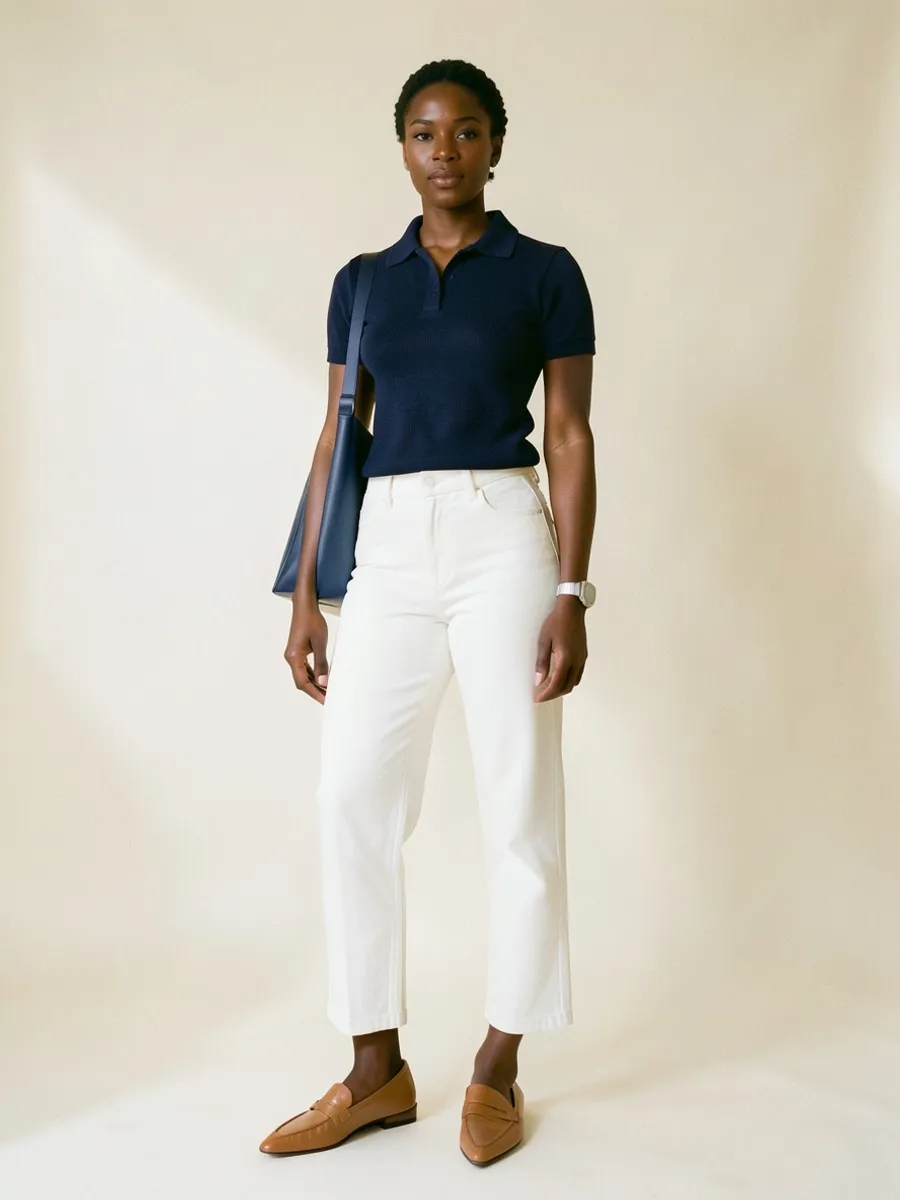
Dramatic Classic · AI outfit illustration
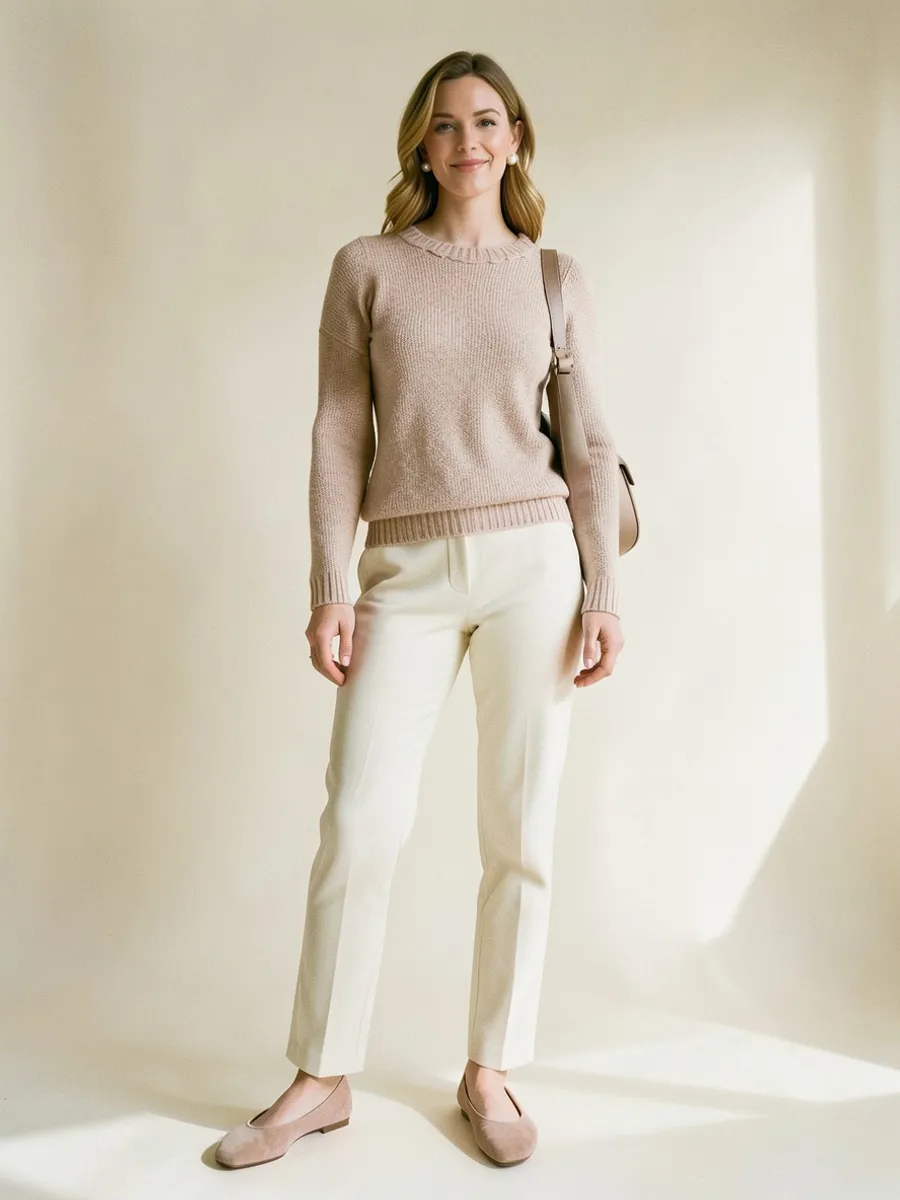
Soft Classic · AI outfit illustration
Dramatic Classic versus Soft Classic is the hardest comparison in the Classic family, and honestly one of the hardest in the whole system. Both types are balanced. Both are symmetrical, moderate, and refined. Neither has width to accommodate, neither has extreme curve, neither is tall or petite in any defining way. So the usual Kibbe shortcuts — check for width, check for vertical, check for curve — all come back "moderate." What separates these two is not an accommodation at all. It's the direction of a very quiet undercurrent: a faint sharpness in the Dramatic Classic, a faint softness in the Soft Classic. Learning to read that undercurrent is the entire game here.
Dramatic Classic
Balanced with Yang influence
Polished sophistication with edge. Dramatic Classics have the balanced proportions of Classics with a slight Yang sharpness.
Full Dramatic Classic GuideSoft Classic
Balanced with Yin influence
Graceful and refined femininity. Soft Classics combine Classic balance with a soft, feminine undercurrent.
Full Soft Classic GuideWhy Dramatic Classic and Soft Classic Get Confused
Most comparisons in Kibbe are between types that need different things — width versus curve, long vertical versus short. Not this one. Both DCs and SCs need the same core thing: balance, symmetry, moderate proportion. Their recommended wardrobes overlap by maybe seventy percent, which is exactly why women stall between them. You try on a tailored sheath dress and it works either way. The confusion also runs deeper than clothes: both types read as "polished" and "put-together" to other people, so the outside feedback you get is identical. The tiebreaker lives in the last thirty percent of the wardrobe — and in the edges of your bones, not their size.
The Key Difference
Both types sit at the balance point of the yin-yang scale, but neither sits exactly on it. The Dramatic Classic leans a few degrees toward yang: bone edges finish with a slight point, features taper, the overall line is a touch crisp. The Soft Classic leans the same few degrees toward yin: bone edges finish with a slight rounding, flesh has a gentle give, the overall line blurs faintly at its borders. Here is the practical version — DC is balance that hardens at the edges; SC is balance that melts at the edges. Same skeleton category, opposite finishing detail. And because clothing lives at the body's edges, that tiny difference decides which garments look expensive on you and which look slightly wrong.
Frame and clothing fit
Look past the overall size of the frame — both types are moderate there — and study how each bone terminates. On a Dramatic Classic, the jaw usually turns a visible corner below the ear rather than curving continuously. The chin has a point or a squared-off finish. Collarbones sit straight and legible under the skin. Shoulders are neither wide nor narrow, but they end at a defined angle, which is why a set-in tailored sleeve looks so clean on a DC: the garment's shoulder seam has a real corner to land on. The Soft Classic frame is the same size and the same symmetry, but every one of those terminations rounds off. The jawline sweeps from ear to chin in one unbroken curve. The chin is rounded. Shoulders slope gently into the arm with no hard corner, so a sharply padded shoulder seam floats above the actual body and reads as costume. Wrists and ankles on an SC are often the giveaway spot — fine and slightly soft, where a DC's show a clean knob of bone. Neither frame needs accommodating in the Natural or Romantic sense. What each needs is agreement: seams, collars, and hems that finish the way the bones finish.
| Dramatic Classic | Soft Classic |
|---|---|
Balanced, moderate frame | Moderate, balanced frame |
Slightly angular bones | Slightly soft edges |
Symmetrical proportions | Symmetrical proportions |
Moderate vertical line | Moderate vertical |
Slightly sharp edges | Gentle slopes |
Body Flesh and Curves
Dramatic Classic flesh is even and lean-leaning. It sits close to the bone, so the faint angularity of the frame stays visible through it — you can usually see the collarbone, the jaw corner, the shape of the knee. Muscle tone tends to show. Even when a DC gains weight, she gains it evenly and the sharp finishing points of her face stay put. There is no real curve accommodation; a fitted straight skirt hangs from her hips in nearly a plumb line. Soft Classic flesh is also evenly distributed — this is still a Classic — but it carries a slight plushness. Cheeks stay full into adulthood, the upper arms have softness, and there is a gentle waist-to-hip curve that isn't dramatic enough to call a true curve accommodation but is real enough that rigid, poker-straight garments leave a small gap at the waist and pull at the hip. Lips are usually fuller, eyes rounder. If you photograph both types in harsh overhead light, the DC's face gains cheekbone shadows and looks striking; the SC's face flattens slightly, because her structure is genuinely smoother.
| Dramatic Classic | Soft Classic |
|---|---|
Moderate, even distribution | Soft, moderate curves |
Lean to moderate build | Even distribution |
Slight angularity | Slightly rounded |
Even proportions | Gentle hourglass tendency |
Not overly soft | Soft arms and thighs |
Try a fair outfit comparison
Skip shoulder and width tests — they won't separate these two. Run the crispness test instead. Take a plain white cotton button-up shirt, freshly pressed, collar starched, and button it to the second button. On a Dramatic Classic this is a complete outfit; the sharp collar points echo her jaw and she looks finished, almost editorial. On a Soft Classic the same shirt looks faintly severe, like she borrowed it — she'll instinctively want to soften it with an open neckline, an earring, a wave in her hair. Second: the slicked-bun test. Pull all your hair back tight, no makeup, and look straight into the camera. A DC's face gets better — the exposed angles carry the whole image. An SC loses warmth and looks unfinished, because her face relies on softness around it, not exposed structure. Third: trace your jaw in a photo with your finger. One continuous curve from ear to chin, or a line that turns a corner? Corner is DC. Curve is SC. Most women know the answer within ten seconds of actually looking.
Celebrity references and their limits
Put Olivia Palermo next to Dakota Johnson and the undercurrent becomes obvious. Palermo, a textbook Dramatic Classic, has built an entire career on crisp tailoring: sharp-lapelled blazers, cigarette trousers with a pressed crease, pointed pumps, slicked-back hair. Watch how she wears a structured white blazer at fashion week — the sharp shoulder seam and pointed lapel sit exactly on her frame, and the more severe the styling gets, the better she looks. Nothing about it wears her. Dakota Johnson has the same moderate, balanced frame — nobody would call her wide, angular, or extremely curvy — yet her best red-carpet moments run the opposite direction. Her signature Gucci looks lean on bias-cut slip dresses, draped cowl necklines, and loose waves around her face. When stylists have put her in stiff, sharply structured pieces, the clothes look good and she looks slightly absent inside them; the hard edges have nothing on her body to agree with. Same balance, same polish, opposite finishing detail — Palermo's edges are drawn in ink, Johnson's in watercolor.
Dramatic Classic Celebrities
Jackie Kennedy
Olivia Palermo
Claire Danes
Diane Sawyer
Jane Fonda
Demi Moore
Soft Classic Celebrities
Naomi Watts
Marion Cotillard
Dakota Johnson
Lee Remick
Leighton Meester
Rose Byrne
Common Mistakes to Avoid
The classic error is deciding based on personality or body confidence rather than edges. Assertive women who work in corporate settings talk themselves into Dramatic Classic; gentle, quiet women talk themselves into Soft Classic. Kibbe doesn't care about either. I've typed soft-spoken kindergarten teachers as DCs and courtroom litigators as SCs — the bones don't read your résumé. The second error is weight-related. A Soft Classic who leans out often re-types herself as DC because her face looks more defined; a Dramatic Classic who gains ten pounds assumes she's become an SC. Neither happened. Check the terminations that weight can't reach: chin shape, wrist bone, the corner (or curve) of the jaw. Those are stable from your twenties onward, and they're the honest answer.
How Styling Differs Between These Types
Both wardrobes are built on tailoring, quality fabric, and moderate silhouettes — that part is shared. The split is in construction crispness. Dramatic Classics should buy the sharper version of everything: pressed creases, notched and peaked lapels, pointed collars and pointed toes, gabardine and crisp cotton that hold a line, monochrome columns, hair with a defined edge. Ornament works against them; precision is the ornament. Soft Classics should buy the rounded version of the same wardrobe: shawl collars instead of peak lapels, draped cowls instead of starched points, crepe and silk jersey instead of gabardine, an almond toe instead of a stiletto point, a soft wave instead of a blunt bob. Not flowy, not unconstructed — this is still Classic tailoring — but every edge eased by a few degrees. Each type in the other's version looks ninety percent right and quietly wrong, which is exactly how most mistyped Classics describe their closets.
Dramatic Classic Style Recommendations
- Sharp tailoring
- Clean, minimalist lines
- Sophisticated pieces
- Structured but not stiff
- Monochromatic looks
- Quality over quantity
Soft Classic Style Recommendations
- Soft tailoring
- Feminine details
- Draped fabrics
- Gentle curves
- Polished elegance
- Balanced proportions
Frequently Asked Questions
Still Not Sure Which Type You Are?
Our AI-powered Kibbe body type test analyzes your proportions from photos and can help suggest a starting point between Dramatic Classic and Soft Classic, with its limitations clearly explained.